[pms-logout text="Bienvenido, {{meta_user_name}}" link_text="Salir"]

La Clave | Claude Le Quéré
President of French Association of Civil Engineering (AFGC)
“Bridge design is always a collective creation”
Claude Le Quéré holds engineering degrees from the École Polytechnique and the École Nationale des Ponts et Chaussées in Paris. She develops her professional activity at Egis, one of the leading French companies in civil engineering, where she is director of the Bridges and Structures Department. Since 2022, she has chaired the French Association of Civil Engineering (AFGC), an organization that brings together all the players in French civil engineering, from where she promotes the values of contemporary engineering and the participation of women in the sector.
José Romo Martín
Do you consider that there are some characteristic features of bridge design in France?
The design of bridges in France follows the heritage of a very standardised approach where each phase has specific queries and objectives.
This philosophy consists of starting with an exhaustive inventory of the issues and constraints, scanning the solutions compatible with this inventory, and gradually refining the design.
This structured and progressive approach guarantees public utility of the projects and their suitability for the needs of current and future users.
It is a clear framework for our architects and engineers when we have reasonable deadlines to work within.
What is the usual way of contracting bridges in France, and are design competitions frequent? Why?
In most cases, the designer is chosen by the public authority following a classic call for tenders where price and technical rating are considered.
The design offices and the architectural agencies then team up and together draft a methodology and a general intention.
In certain cases, for signature structures in noticeable urban environments or remarkable natural sites, the public authority may launch a design competition.
Then the architect/engineer team develops an architectural and technical proposal (which remains anonymous) and a public committee selects the best proposal which obtains the mandate for the continuation of the design and the follow-up of the construction.
Sometimes the competitions take the form of a Design & Build, with a contractor associated with the design team and which is committed from the beginning to the construction of the project.
In your opinion, what is the effect of the type of procurement on the design and the outcome?
The design competitions are very exciting moments for our teams because they allow in a short period of time intense exchanges between architects and engineers, and really creative process.
Competitions have become less frequent in recent years with the financial difficulties of our local authorities, but it will come back because it is a good way for our decision-makers and our fellow citizens to be actors in the aesthetic choices which directly impact their living environment daily.
Is the authorship of the design (of the civil engineer) recognised in France, or is the authorship hidden because it is a collective work?
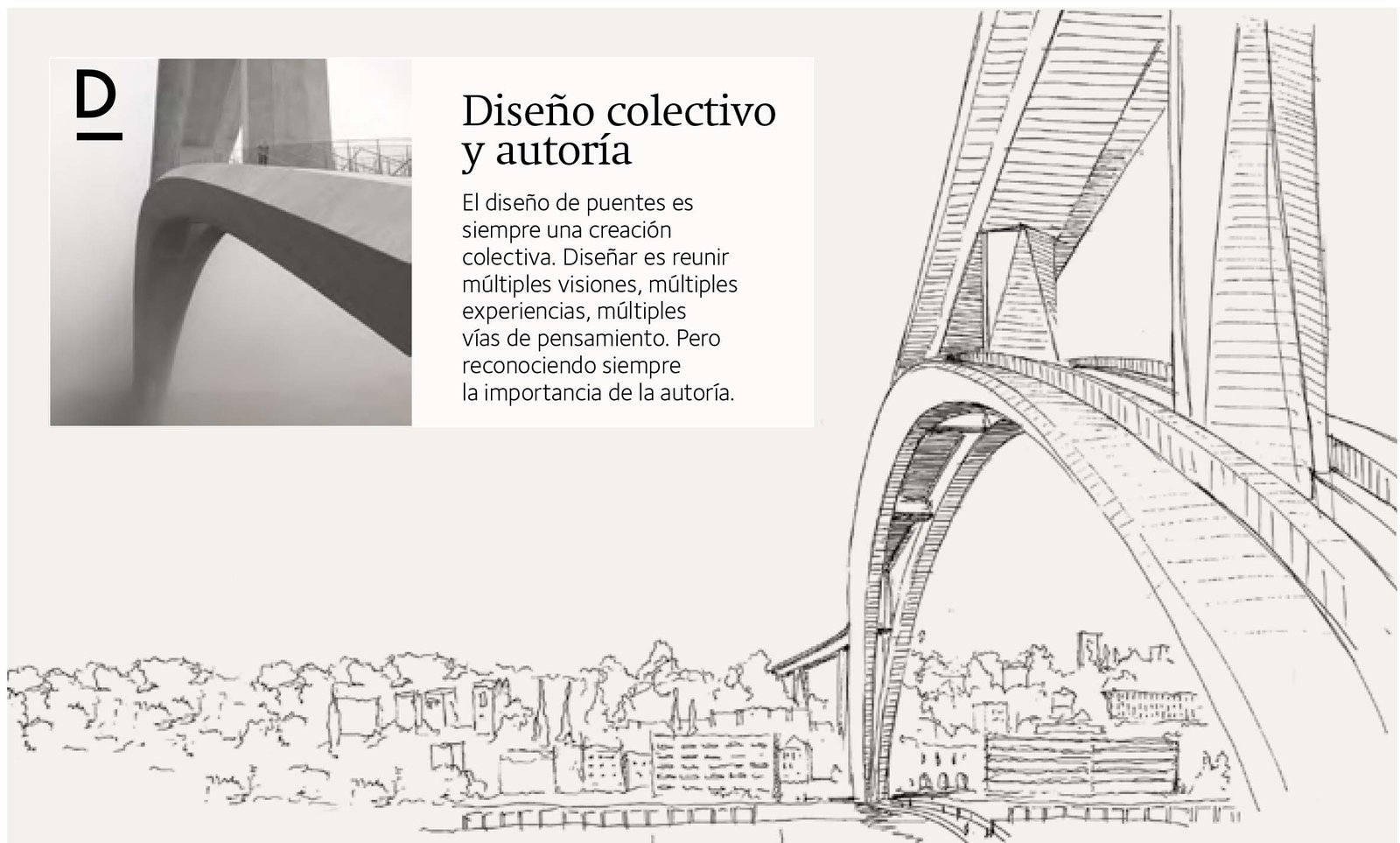
Bridge design is always a collective creation! Designing a bridge means bringing together multiple visions, multiples experiences, multiple thought paths to offer a tailor-made solution for each client, for each combination of uses and for each site.
Of course, the name of the architect must be mentioned. The names of the engineering team should be too, but it is often forgotten.
It is a mistake and the promotion of our important profession to young generations depends on this recognition.
I have been President of the French Association of Civil Engineering since last year and some members of the association have written on our website great pages dedicated to the memory of our great engineers.
Come and visit it! https://www.afgc.asso.fr/history/personnages/.
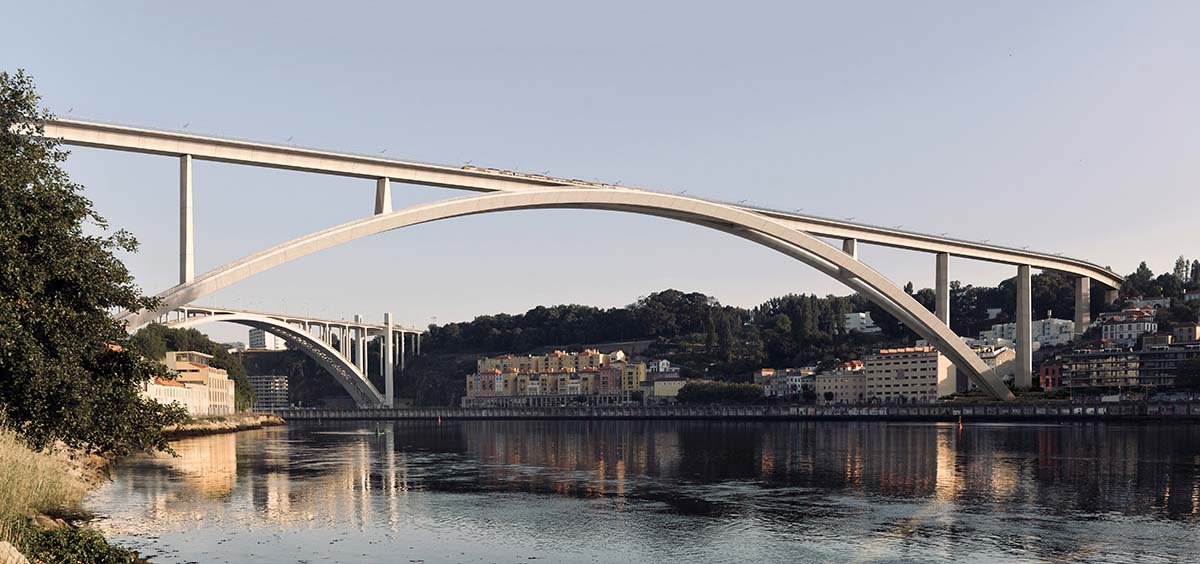
Bridge over the Douro. © Team OODA/Armando Rito Engenharia AS/ Knight Architects/Egis
Are the architects involved in the design of bridges in France? What is the role of the architects and the civil engineers in that type of projects?
As mentioned above, architects are very often integrated into the design of bridges and form an integrated team with engineers.
They participate in all stages of design, in drafting architectural specifications for work tenders and in validating architectural elements during construction, even if their involvement is proportionally greater in the upstream phases.
How is consider the “user experience” in bridge design in France? How does it change the way of designing?
Considering the needs of the users concern both the engineer and the architect. The architect thinks about the user’s experience in all its sensory dimensions. The engineer ensures the functionalities of the bridge, the safety and the comfort of the users. More and more, we integrate the requirement of modularity on our bridges, to think about the current uses and allow an evolution of these uses.
The adaptability of structures is as important as their durability.
In the future, sustainability and sobriety will be at the heart of bridge design.
At what level is the public participation in the design process in France? Do you think is positive for the outcome?
A novelty has appeared in recent years: design competitions with an audition in front of a public committee. Such a competition took place last year in Nantes.
This new format makes it possible to associate the people and future users with the choice of the best proposal.
And it is a new field of reflection that is offered to designers.
Which recent relevant design projects or design competition would you highlight?
Since you are giving me this opportunity, I would like to mention four bridges that have marked my career.
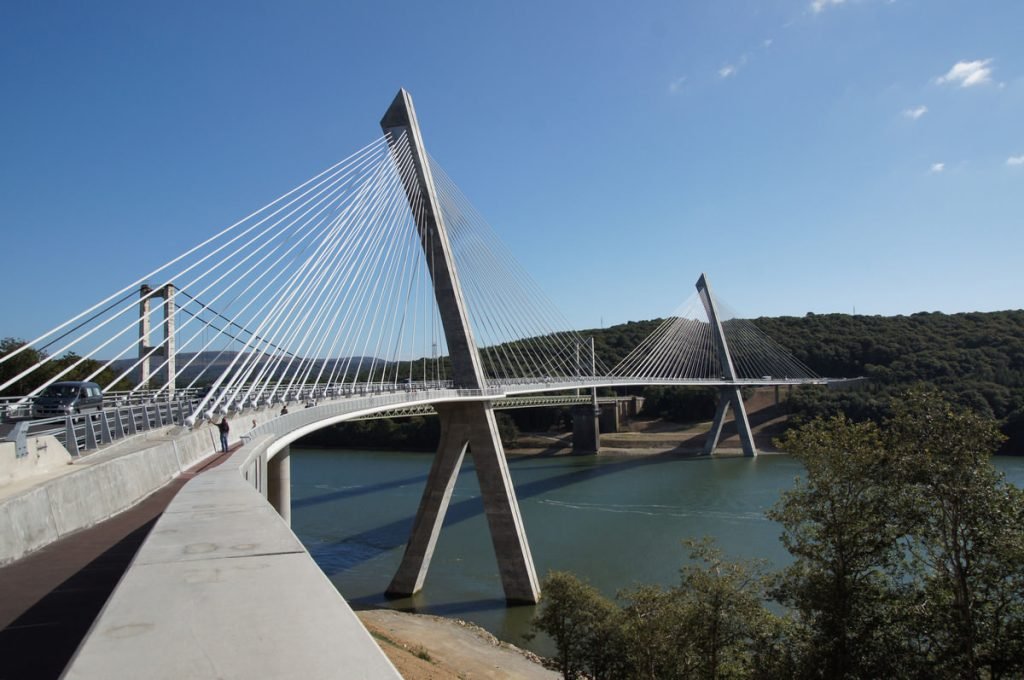
As a young engineer in the French Ministry of Transports, I had the honor of working on the Térénez bridge during its construction.
This curved cable-stayed structure, designed by Michel Virlogeux and Charles Lavigne, is a balancing act.
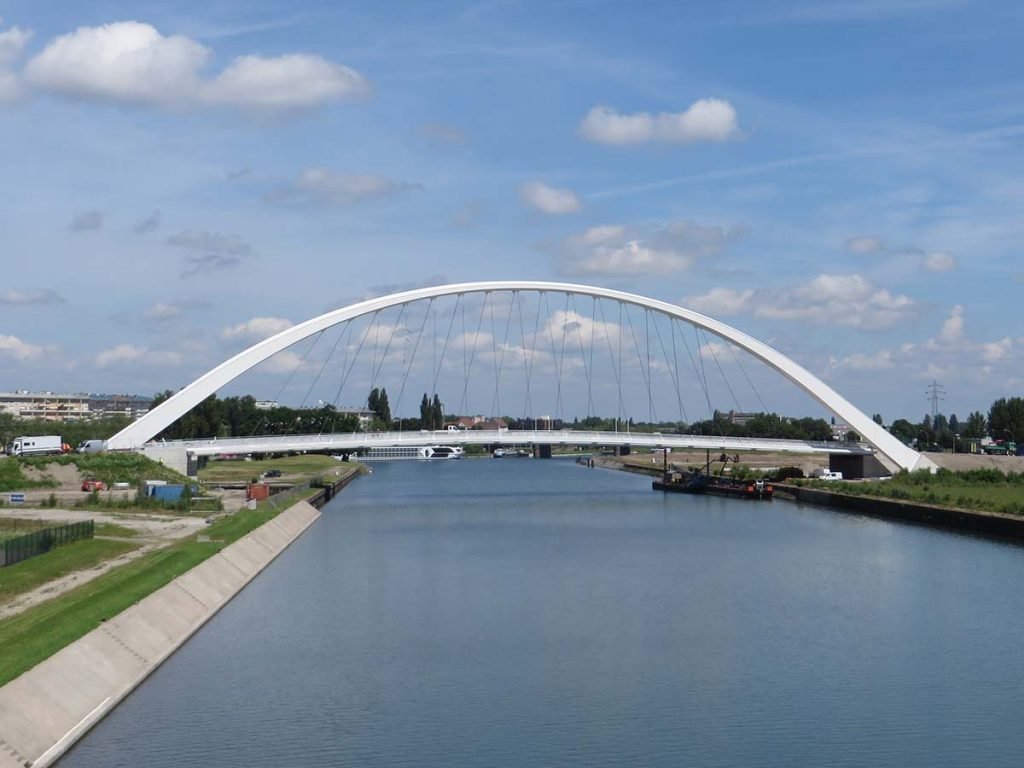
A few years later, now as project manager at Egis, I had the chance to work again on this notion of balance, with the Citadelle bridge (now André Bord bridge in Strasbourg).
This bridge enables the urban tramway to pass over one of the port basins for an extension into Germany.
Located in a large curve on the route, it is formed of a steel arch of 180-meter span, which straddles and supports a very slender steel deck. The structure’s geometry was precisely calibrated in 3D to comply with all the required structure gauges and the equilibrium of forces transmitted by the deck to the arch.
This slender and striking bridge, designed with the architect Jean-Bernard Nappi, received the Grand Prize for Engineering in 2016 and the Eiffel trophy for steel bridge in 2017.
In 2018, Egis won the competition for another tramway structure: the Arts et Métiers bridge in Angers. In the historic perimeter of the castle of Angers, a new urban line was to cross the Maine. The longitudinal profile was very constrained from above, as the tramway had to be finely inserted into the city on each of the banks, but also from below because of the river’s flooding.
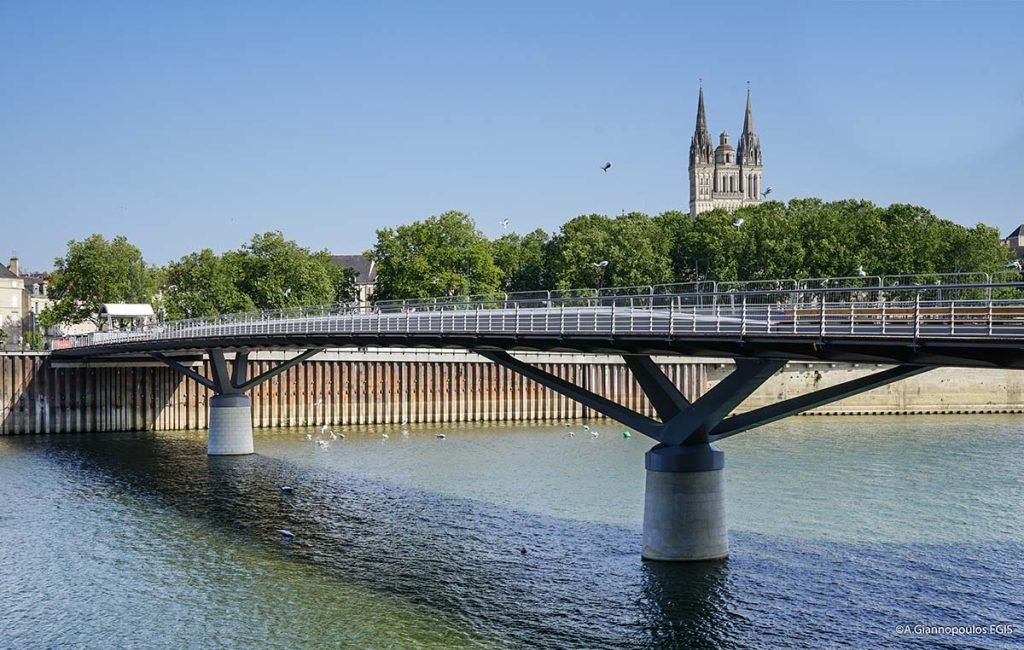
With the architect, Thomas Lavigne, we designed an ultra-flat bridge, supported by two tetrapod-shaped piers that provide a dynamic and pure line.
Finally, in 2021, within an Armando Rito – Egis–OODA–Martin Knight–Egis consortium, we competed for the new bridge over the Douro in Porto.
Unfortunately, we were not successful of this competition, but it was a great pleasure to develop a very ambitious solution in an incredibly creative team.
We designed a project that looks like us: slender, balanced and sober.
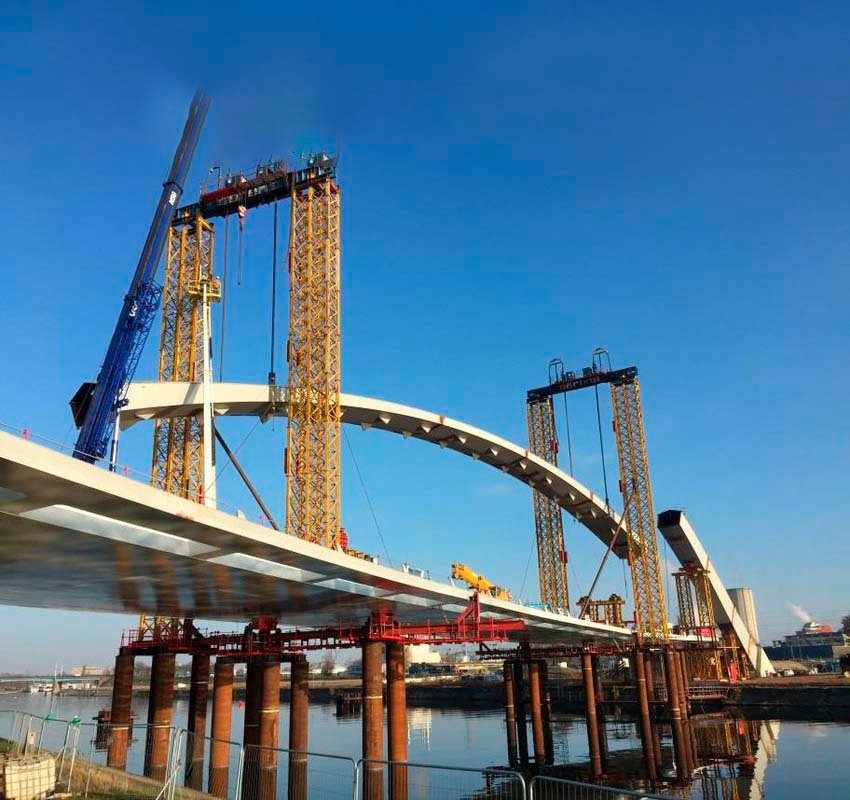
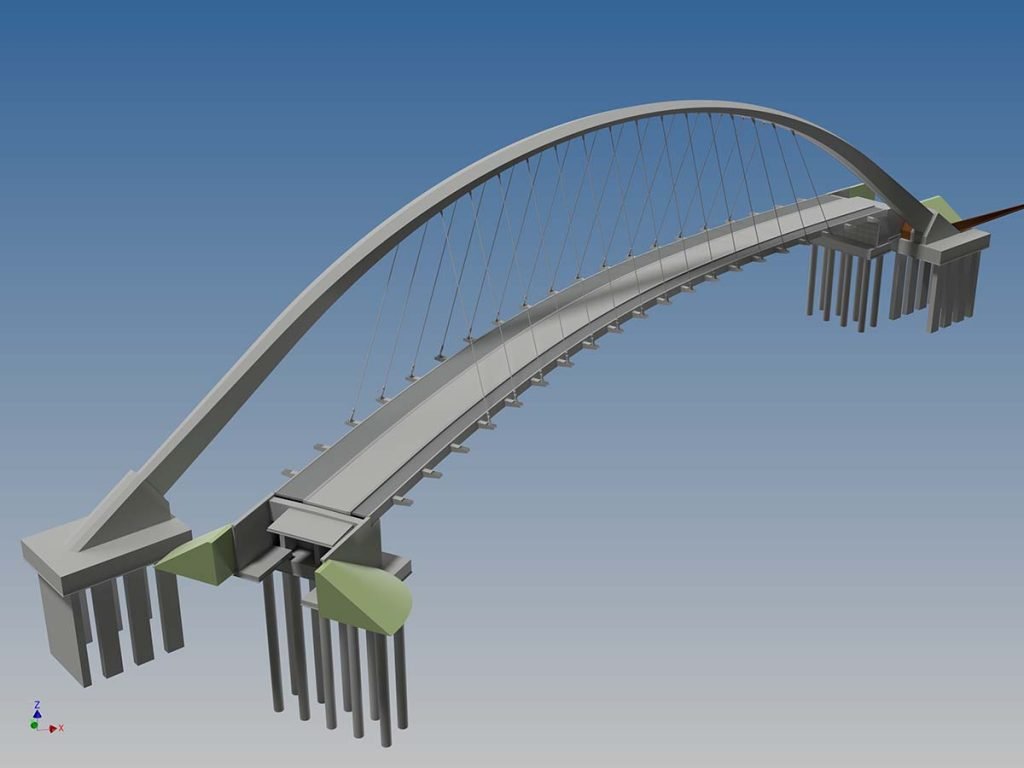
Citadelle Bridge and structural elements. © Egis
What do you think are the trends in bridge design globally and in France?
Tomorrow, sustainability and sobriety will be at the heart of bridge design. We will rehabilitate, strengthen, adapt and extend the life of structures.
For new structures, we will use less quantity of material, more carbon-efficient materials, more recycled materials, materials chosen and formulated specifically for their use. While continuing to guarantee the durability and adaptability of the structures. The challenge before us is immense and we need curious and passionate engineers to meet it.
In France, as in other European countries, we are experiencing a period of disenchantment with the construction industry and with engineering professions in general. In particular, we are not succeeding in increasing the proportion of women in our professions. It’s really frustrating.
Because engineers are not the cause of our current ills. Engineers are there to find operational solutions to the complex problems facing society.
Let’s commit ourselves individually and collectively so that humanity can correctly state the problems of today and tomorrow and then trust engineers to develop the range of solutions.